
Ford Ranger Raptor Cooling Upgrades: 3.0 V6 Heat Soak Guide
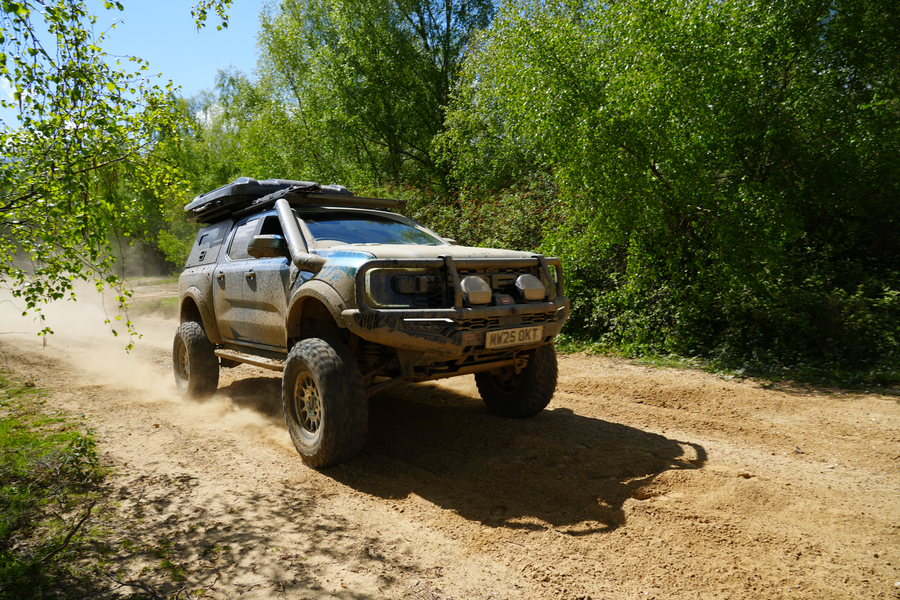
Written by Tristan Heap, Hoonies Adrenaline. Prices and availability last checked 22 July 2026.
Nobody buys a Ranger Raptor to drive it gently. I certainly don't drive mine gently. But the harder you work these trucks, the more heat you put into them, and heat is sneaky. It rarely breaks anything outright. It just quietly pinches a bit of power, a few degrees at a time, hands it back once everything cools down, and leaves you wondering why the truck felt lazy all afternoon.
This guide separates the different heat problems a hard worked Raptor can have, shows you how to work out which one your truck actually has, and lays out a sensible order for fixing it. The aim, as always, is to spend money where it helps, not on the shiniest thing in the catalogue.
The quick answer
If you only read one section, read this one.
- Free first: wash the mud out of your heat exchangers and check your coolant. A packed radiator stack can undo everything else on this list.
- Cheap second: a performance thermostat gets the coolant side working earlier, and heat wrap and barriers keep radiant heat off parts that shouldn't be cooking. Neither costs much.
- For tuned trucks: if your logs show charge air temperature climbing, the intercooler is the biggest single lever you can pull.
- If you tow or crawl: a transmission cooler protects the ten speed auto, which works harder than most owners realise.
- Diagnose before you buy. The right first purchase depends on which heat problem your truck actually has. The next two sections show you how to tell.
You do not need all of it. Match the kit to how you use the truck, and stop when the problem is solved.
The jargon, quickly
Four terms this guide leans on, in plain English:
- Heat soak. What happens when a part takes in heat faster than it can shed it. The metal itself warms up and stays warm, so instead of cooling the system around it, it starts heating it. A soaked intercooler isn't cooling your intake air any more; it's warming it. Park up after a hard run, or sit in a queue, and everything under the bonnet soaks together.
- Charge air. The air the turbos have compressed on its way into the engine. Compressing air heats it, hot air is less dense, and less dense air means less power. Charge air temperature is the number tuned trucks live and die by.
- Radiant heat. Heat thrown off a hot surface into everything near it, the way you feel a bonfire from ten feet away. The exhaust side of a V6 bay radiates constantly, and intake pipes, wiring and hoses drink it in unless there's a barrier in the way.
- Convective heat. Heat carried by the air itself. On the move, airflow carries it out of the bay. At a standstill, the same air just circulates and everything drifts up towards the same temperature.
That's the whole game: get heat out through the cores, stop it spreading with barriers, and keep the numbers that matter (charge air, coolant, transmission fluid) where they belong.
The four heat problems (they are not the same problem)
"The truck runs hot" covers four different problems, and each one has its own fix. They often overlap on a hard day, but buying the fix for the wrong one is how you end up a grand lighter with the same problem.
| The problem | What you'd typically notice | Where to look first |
|---|---|---|
| Hot charge air | Power fades during repeated hard use, worse on warm days | Intercooler and pipes (Step 3), once your logs show the climb |
| Hot coolant | Temperature creeping up in slow, heavy work | Cooling system health first: level, leaks, fans, packed rads (Step 0). Thermostat once faults are ruled out (Step 1) |
| Hot transmission fluid | Clunky or hesitant shifts when everything's hot, warnings or protective behaviour when towing or crawling (some warming under load is normal) | Transmission cooler (Step 4) |
| Radiant heat in the bay | Intake pipes, hoses and wiring cooking near the exhaust side after slow, hot work | Wraps, blankets, tape and shields (Step 2) |
Keep this table in mind as you read. The right entry point is the row that matches what your truck is actually doing, not just the top of the page.
Log it before you buy: how to diagnose heat soak
A truck that "feels flat" is a clue, not a diagnosis. Plenty of things make a truck feel lazy, so before you spend serious money, get some numbers.
What to log. The Raptor gives you a head start here: charge air temperature, cylinder head temperature and more can be shown right on the dash through the gauge view, so you can keep an eye on things from the driver's seat with no extra kit. For coolant, transmission fluid and a proper recorded log, you'll want a diagnostic tool that can read the relevant Ford data. FORScan with a decent adapter does the job, and if you're tuned by us, the logging device that comes with every tune reads all of this already. Whatever you use, log the temperatures as separate things, because they point at different fixes: charge air, engine coolant and transmission fluid. Note the ambient temperature too, because a run on a 12 degree morning and the same run on a 28 degree afternoon are different tests.
Make it repeatable, and keep it legal. Proper back to back heat testing means repeated full load runs, and that's a job for a dyno, a private test area or another lawful controlled environment, not the public road. On the road, log the driving you already do: your usual commute, your usual tow, your usual lane. Wherever the data comes from, keep the load, the gear and the starting conditions consistent, because the evidence is the pattern across runs, not any single number.
Reading the pattern. Charge air temperature that climbs run after run while coolant stays steady points at the intercooler. Coolant creeping upwards during slow, heavy work points at the cooling system itself, so check level, condition, fan operation and a clear radiator stack before you spend on upgrades, because a fault fixes cheaper than an upgrade. And expect some transmission warming under load, because that's normal. What matters there is warnings, protective behaviour or a sustained high trend, not the fact the fluid gets warm.
Rough numbers to steer by. Every forum thread wants one magic number, and the reality is that sensor location, conditions and what the truck is doing all shift the picture. But flying completely blind helps nobody, so here are the rough bands we work to. Read them as sustained values while the truck is working, not brief spikes, which are normal:
| Reading | 🟢 Happy | 🟠 Working hard, keep an eye on it | 🔴 Back off and investigate |
|---|---|---|---|
| Charge air temperature | under 50°C | 50 to 70°C | sustained over 70°C |
| Engine coolant | 75 to 100°C | 100 to 110°C | over 110°C |
| Transmission fluid | under 100°C | 100 to 110°C | over 110°C |
Treat the table as a steer, not gospel, and let the truck have the final word: any warning light or protective behaviour trumps a nice looking number. If you have logs and you're not sure what they're telling you, send them to us. Reading data is exactly how our tuning work with Lukos runs, so you'll get an answer based on your truck rather than a forum rule of thumb.
Know when to stop. Mild heat soak usually won't show a fault code or a warning light, which is why logging is worth doing. But heat problems can absolutely announce themselves: coolant or transmission temperature warnings, reduced power behaviour or limp mode are the truck telling you to stop testing. If you see any of those, park the testing and get the truck inspected before you go shopping for upgrades.
Why the truck gets hot in the first place
Engines are shockingly wasteful things. A big chunk of the energy in every litre of fuel becomes heat rather than drive, and that heat has to go somewhere: into the coolant, into the oil, out through the exhaust, and off every hot surface as radiant heat. On top of that, the turbos heat the intake charge just by compressing it, the torque converter and gearbox make their own heat under load, and the exhaust side of the bay radiates at everything sharing the space.
None of this is a problem while heat out matches heat in. The cooling stack hands it to the air flowing through, the bay vents the rest, and every temperature sits where it should. Trouble starts when the balance tips: more heat going in, less airflow taking it out, or both at once.
The situations that tip the balance
Four come up again and again with the trucks we see, and UK owners hit all four every summer:
Towing. The Raptor is rated to tow up to 2,500kg braked depending on exact specification, so check your own vehicle's documentation. Plenty of owners use most of that. Towing means sustained load at moderate speed: lots of heat going in, modest airflow coming through, and transmission temperatures doing the climbing.
Slow, heavy off road work. Green lanes, sand, steep climbs. High load, low speed, almost no airflow through the front end, and the torque converter working overtime. This is where trucks that feel perfect on the road start to struggle.
Second gear, walking pace, zero airflow. This is the exact situation the rest of this guide is built around.
And there's a version of this every laner will recognise: the group reaches an obstacle, everyone piles out to watch the first truck have a go, and the rest of the convoy sits there idling with phones out. Engine running, truck stationary, zero airflow. We do it too, it's the best bit of the day. Just know the temperatures are quietly creeping while you enjoy the show.
Traffic. The one nobody thinks about. At a standstill the engine is still making heat, the air conditioning is dumping its own heat into the same stack of cores, and no cool air is being pushed over anything because the truck isn't moving; the fans are fighting alone. Sit in a queue straight after a hard run and you can watch it happen on the gauges: heat soak growing in real time, everything under the bonnet drifting up together.
Hard summer road driving. Fast A road work, repeated overtakes, a run to the coast with the family and all the kit aboard. Every burst of boost puts heat into the intercooler faster than the stock core sheds it, and the pattern from the logging section shows up: intake temperatures still climbing when you get back on the throttle.
If none of those sound like your driving, you may not need anything from this page. If two or three sound familiar, keep reading.
Step 0: the upgrade that costs nothing
Before you spend a pound, look at what's blocking the cooling you already have.
The Raptor stacks its heat exchangers at the front of the truck: air conditioning condenser, intercooler and radiator, one behind the other. After a season of laning, mud and dust pack into the gaps between those cores, where you can't see it from either side. Airflow through the stack drops, and every heat problem on this page gets worse.
So: rinse the stack through gently, from the back where access allows, and get the chassis and underbody clean while you're there. Our Salt Shift underbody guide covers the kit that makes that job easy, and the Salt Shift range is here. Check your coolant level and condition at the same time.
While the bonnet's up, two more free checks. Pull the air filter and have a look, and clear the airbox out while you're in there: a season of laning fills both with dust, leaves and worse, and a choked filter makes the engine work harder for the same result. Then go round the intercooler pipework and make sure every clamp and coupling is tight and properly seated. Loose charge pipes leak boost, which means the turbos work harder and make more heat chasing the same target, and a pipe that lets go entirely ends the day on the spot.
Half an hour of free checks, and a clean, tight front end is the foundation everything else builds on.
The right order for cooling upgrades
The steps run from basic checks to system specific upgrades. Start where your evidence points, not at the cheapest number on the page.
Step 1: A performance thermostat for cheap headroom
If coolant temperature is your problem, rule out faults before you upgrade anything: level, leaks, fan operation, a packed radiator stack or a lazy standard thermostat are repair jobs, not upgrade jobs. Once the system is healthy, the Hoonies Adrenaline Performance Thermostat Kit (£99.99) works the coolant side of the problem. A lower temperature thermostat brings the cooling system in earlier, so on a hot day it's working before temperatures have already run away. It follows the same logic as the spark plug advice in our Raptor upgrade path guide: a small, sensible change that supports everything after it. It won't transform the truck on its own, nothing at this price will, but it's cheap support for a tuned engine and pairs naturally with a service.
Here's what that looks like on a real truck. Both lines are engine coolant temperature from the same Raptor on the same drive in similar ambient temperature, logged before and after fitting the kit, redrawn onto one scale so the gap is easy to see.
 Blue is the standard thermostat: settles mid 80s,
spikes past 90. Orange is our kit on the same drive: mostly 75 to 84,
one brief peak at 87.
Blue is the standard thermostat: settles mid 80s,
spikes past 90. Orange is our kit on the same drive: mostly 75 to 84,
one brief peak at 87.
That's one truck on one drive, so treat it as an example rather than a promise. But the pattern is the point: the system holds a lower baseline, which leaves more margin before hot weather, towing or slow work starts eating into it.
Step 2: Heat barriers for the radiant heat problem
Everything else on this page sheds heat. Passive heat management stops it landing where it shouldn't in the first place, and it's the best value corner of this subject.
On a twin turbo petrol V6 the exhaust side of the bay runs seriously hot, and everything sharing that space, intake pipework, wiring, hoses and fluid lines, soaks up radiant heat it doesn't need. The Funk Motorsport range attacks that directly:
| Product | Price | The job it does |
|---|---|---|
| Titanium Lava Rock Exhaust Wrap | from £36.00 | Keeps exhaust heat inside the exhaust and out of the bay |
| Exhaust Blanket Wrap Around | from £65.00 | Targeted shielding for the spots wrap can't reach |
| Gold Reflective Heat Tape | from £21.00 | Reflects radiant heat away from intake pipes, hoses and wiring |
| Induction Kit Thermal Barrier Sleeving | from £46.00 | Helps keep the intake tract cooler, which means denser air going in |
Silver tape, adhesive blankets, barrier sheeting for larger areas and vehicle specific turbo blankets are all in the full Funk collection linked above.
Before you fit any of it, check clearance around lines, sensors, brackets and the materials next to what you're wrapping, and follow Funk's fitting instructions, including their guidance on installation and first heat cycles.
Keep the expectations straight: wrap and tape shave degrees where the intercooler and coolers below shift serious heat. But at these prices, on a truck that works slow and hot with little airflow through the bay, this is some of the best value per pound on this page. Do it before the big spends, not instead of them.
Step 3: The intercooler for the charge air problem
If your logs show charge air temperature climbing run after run, this is the system to investigate.
The intercooler cools the compressed air from the turbos before it enters the engine. The stock core does that job at standard output in mild weather. Push more boost through it on a warm day and it soaks: intake temperatures climb, the ECU winds the safety margins in, and your carefully built power quietly disappears. A larger, denser core sheds that heat instead of storing it, which means the power you paid for is still there on the third run, not just the first.
A straight word before the table: a bigger intercooler on a completely stock, gently driven truck adds very little by itself. It is not there to add power. It is there to stop heat taking your power away. It earns its money on tuned trucks, towing trucks, and anything driven hard in summer.

A Process West Stage 2 kit going on. With the front end stripped you can see exactly what the airflow has to feed: everything on this page shares that one opening.
| Option | Price | Hoonies recommendation |
|---|---|---|
| Turbosmart Performance Intercooler | £851.94 | Strong value for tuned road trucks |
| Process West Stage 1 Intercooler | £1,276.44 | Serious fast road and towing use; add the hard pipe kit to complete it |
| Process West Stage 2 Intercooler | £1,770.31 | Maximum effort builds; matching Stage 2 pipe kit available |
Already running Stage 1 and stepping up? There's a Stage 1 to Stage 2 piping upgrade kit so you're not buying pipework twice. If you're unsure which suits your build, tell us how you use the truck and what's already fitted, and we'll give you a straight answer, even if that answer is "keep the money for now."
Step 4: A transmission cooler for the fluid temperature problem
The ten speed auto works hard for a living, and automatic gearboxes are sensitive to sustained heat: high fluid temperature ages the fluid faster, and the gearbox depends on that fluid for everything it does. Towing, slow off road work and long stints in traffic are exactly the conditions that push fluid temperature up and keep it there. Some warming under load is entirely normal. The signs worth acting on are shifts that turn clunky or hesitant once everything's hot, temperature warnings, or protective behaviour while you're using the truck the way you plan to keep using it.
An auxiliary cooler gives the gearbox dedicated heat capacity instead of asking the factory system to cope. One check that matters whatever you buy: choose a kit that integrates with the factory heat exchanger rather than deleting it, so you're adding capacity on top of the standard system instead of gambling on a replacement for it. That's how the Process West V6 Transmission Cooler (£1,018.40) we stock is designed: bar and plate core, billet end tanks, proper Gates hose and Speedflow fittings, and it fits alongside both the factory type intercooler and the Process West Stage 1 and 2 cores.
If you tow anywhere near the limit through the summer, we would put this ahead of chasing more power. Big numbers are pointless if the gearbox is cooking away behind them.
Step 5: Supporting upgrades for intake and airflow
Two smaller pieces worth knowing about, and one thing to check:
- Sealed intake. The Process West Sealed Air Intake feeds the turbos more air while keeping the airbox sealed against engine bay heat, where cheap open filters pull in hot air from under the bonnet and make the problem worse.
- Snorkel. The ARB Safari Armax snorkel is primarily about dust and water crossings, but drawing intake air from up high, away from the hot air coming off the road and the radiator stack, is a useful side benefit for trucks that work slow and hot.
- Underbody protection that breathes. If you're armouring the truck for laning, fit plates designed with airflow in mind, like the ALMONT4WD Airflow front skid plate, so you're not solving one problem by causing another.
Step 6: The tune that ties it together
Cooling hardware and calibration aren't separate purchases. They're one system. A proper custom remap is built around the hardware actually fitted to your truck and refined with logged data from real driving, which, done in summer, shows exactly how your cooling copes when it matters. That's how our calibration work with Lukos Engineering runs, it's the same logging you used to diagnose the problem in the first place, and it's why we treat power figures as evidence backed examples rather than fixed promises. The factory cooling system does its job at the standard 292 PS. Ask the truck for a meaningful chunk more and, in our experience across the tuned trucks we look after, every degree of cooling margin gets worked harder, which is why cooling belongs in the calibration conversation from the start.
If you're planning hardware and a tune, talk to us about sequence. Sometimes it's hardware first, sometimes tune first with hardware staged in. It depends on the truck and how you use it.
The airflow tax: bull bars, winches and light pods
One more thing before you plan the build, because it catches a lot of owners out. Everything you bolt to the nose of the truck lives in the same air the cooling system needs. Bull bars, winch drums, light pods and even a badly placed number plate all sit in front of that stack of heat exchangers, and each one takes a share of the airflow that should be pulling heat out of the truck. Bolt several on at once and you can meaningfully restrict the airflow the cooling system was designed to receive.
That is not a reason to run a bare front end. We sell winches, lighting and protection, and we run them on our own trucks:

Our own truck: bar, winch, pods, snorkel, rack. All of it earns its place, and all of it lives in the airflow. Plan for the total.
It is a reason to plan the front of the truck as one system:
- Choose bars that keep the openings clear. A well designed bar is shaped to leave the grille and lower intake openings working. A poorly designed one blanks them off and looks much the same in the photos.
- Mount lights off the openings. Pods sat directly across the grille or intercooler opening trade a real airflow loss for a small lighting gain. Above the bar or below the bumper line usually lights the trail just as well.
- Tuck the winch away. An integrated design like the ARB Bushranger Covert synthetic winch keeps the drum out of the airflow path rather than hanging a solid lump of steel in front of your radiator.
- Plan the two budgets together. If the front end carries bar, winch, lights and armour, and the truck tows or runs a tune as well, the accessories have taken cooling capacity away at the same time as you're asking for more. Budget to give some back, whether from the intercooler, the transmission cooler or both, and you'll never need to find out where the limit was.
Match the kit to the truck
| How you use it | What to investigate first |
|---|---|
| Tuned road truck, driven hard | Log charge air temperature. If it climbs run after run, the intercooler is the conversation, with the thermostat and heat barriers as supporting jobs |
| Towing regularly through summer | Watch transmission temperature behaviour. Warnings or protective behaviour make the case for the cooler; check coolant system health alongside |
| Laning and beach weekends | Clean and inspect the rad stack first, it's free and it's often the answer. Then radiant heat barriers, then logs before any bigger spend |
| Fully accessorised front end | Account for the airflow the accessories take before you read anything else into your logs; a blocked front end can mimic every other problem on this page |
| Maximum effort build | Plan cooling with the calibration from day one: intercooler, transmission cooler and intake specified alongside the tune, not bolted on after it |
These are our recommendations based on the trucks we see, not laboratory rankings. Prices are correct at the date at the top of this guide. And as always: not every Raptor needs a pile of parts. If your logs look healthy and the truck holds its power doing what you ask of it, stop there and spend the money on fuel.
FAQ
Does a remap make the truck run hotter? Higher sustained output generally means more heat for the cooling system to deal with, and anyone telling you otherwise isn't telling the full truth. A properly built calibration respects the system's limits, which is exactly why cooling upgrades and tuning belong in the same conversation.
Will a bigger intercooler add power on a stock truck? By itself, very little, and we'd rather tell you that before you order. What it does is stop you losing power to heat soak. The gains show up on tuned trucks, on hot days, and on the runs after the first one.
Is UK weather really hot enough for this to matter? Off road and towing, in our experience, yes. Load and airflow matter more than the number on the forecast, and a truck crawling a lane in second gear is in a heat situation that road driving rarely creates, whatever the temperature. When the forecast does hit 30, whatever cooling margin the truck had left gets smaller.
Does exhaust wrap actually work, or is it just for looks? It does a real job: keeping heat inside the exhaust instead of letting it radiate into everything nearby. Fit it to Funk's instructions, including their guidance on the first heat cycles, and check clearance around lines, sensors and brackets before you wrap.
I've got a Wildtrak V6 diesel. Does any of this apply? The thinking carries over but the parts differ. Start with the Wildtrak V6 collection or send us your truck's details.
Will cooling upgrades affect my warranty? They could, and we won't pretend otherwise. Fitted parts and remaps can affect how a dealer handles a related claim. Ask us about your specific truck and situation before you commit, and we'll give you the straight picture.
Can I fit these myself? Read the fitting instructions before you decide, and treat them as the authority rather than any blog, including this one. The thermostat involves draining, refilling and bleeding the coolant system correctly. Intercoolers and transmission coolers involve the front end and fluid lines. If you'd rather have any of it fitted and checked, contact us.
How we prepared this guide
The advice here comes from Hoonies Adrenaline and Lukos Engineering's work supplying, fitting and calibrating the parts listed, on our own and customers' trucks. The thermostat comparison chart is our logged coolant data from the same Raptor over the same drive in similar ambient temperature, before and after fitting the kit, redrawn onto a single scale. The temperature bands are the rough working figures we steer by, not manufacturer limits. The photos and video are our trucks, customers' trucks and real installs, not library images. Vehicle output and towing figures are from Ford UK technical data; confirm your own vehicle's documentation for its exact rating. Product prices and availability were checked against the Hoonies Adrenaline store on the date shown at the top of the guide. Where we make a recommendation, it's our view as a retailer and fitter of these parts, not a manufacturer test result.
Final advice from Hoonies
Heat management isn't the glamorous end of modifying a truck. Nobody posts a photo of their transmission cooler. But it's what decides whether the build stays fast all day, all summer, with a trailer on the back, or only manages it on the first run of the morning.
Work out which of the four heat problems your truck actually has, start with what's free, add the cheap headroom, and put serious money into the intercooler and transmission cooler only if the way you drive demands it. Before you order anything, tell us what truck you've got, what's fitted, and what it isn't doing that you want it to do. We'll point you at the right parts in the right order, and nothing you don't need.
Now go get it filthy. Just rinse the rads after.
Shop the range: Ford Ranger Raptor parts and the full Vehicle Tuning collection.